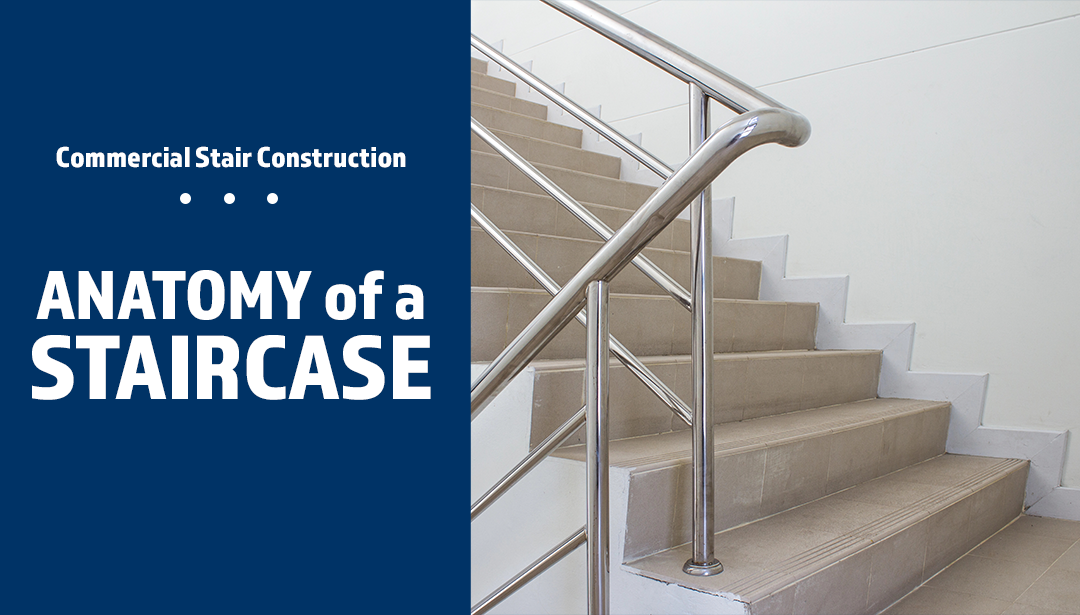
Custom metal stair fabrication has become increasingly common in commercial, industrial, and mixed-use construction projects where standard stair assemblies cannot meet architectural or structural requirements. Architects and contractors frequently encounter stair layouts that require non-standard dimensions, specialized load capacities, or integration with unique building designs. Custom metal stair fabrication allows project teams to produce stairpans, treads, railings, landings, and support components that align with exact project specifications rather than adapting the project to pre-manufactured components.
This fabrication approach provides tighter dimensional control, greater material flexibility, and improved coordination between structural and architectural elements. Fabricated stair systems can also address project-specific code requirements involving occupancy loads, egress conditions, handrail geometry, and accessibility criteria. This article explains how custom metal stair fabrication works, examines the advantages compared to off-the-shelf stair components, and outlines how fabricated systems can improve both the appearance and structural performance of commercial stair assemblies.
What Exactly is Custom Metal Stair Fabrication?
Custom metal stair fabrication is the process of manufacturing stair components to project-specific dimensions, load requirements, and architectural specifications rather than relying on standardized prefabricated assemblies. Fabricated components commonly include stairpans, treads, carrier angles, landing pans, support frames, handrails, guardrails, and infill systems. Each component is produced according to engineered drawings that account for rise and run geometry, structural attachment points, material thicknesses, and finish requirements. Fabrication shops work directly from architectural plans, structural drawings, or field measurements to ensure the stair system aligns with actual project conditions. This process is particularly important for buildings with irregular floor elevations, limited installation clearances, or specialized occupancy requirements. Custom fabrication allows stair assemblies to integrate properly with the surrounding structure without field modification of standard parts.
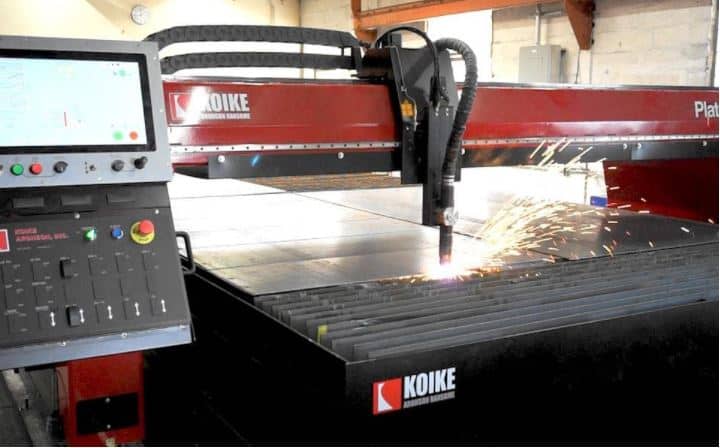
The fabrication process combines engineering review, CAD drafting, CNC cutting, forming operations, welding, and final assembly preparation. Fabricators may process galvanized steel, carbon steel, stainless steel, or aluminum depending on project conditions and environmental exposure requirements. CNC plasma cutting, laser cutting, and press brake forming equipment are commonly used to maintain dimensional accuracy across stair components. Welded assemblies are inspected to verify alignment, connection integrity, and compliance with project tolerances before shipment. Depending on the project scope, fabricated systems may also include finish applications, such as priming with red iron oxide paint, powder coating, galvanizing, or other preventative measures to improve corrosion resistance and/or appearance. The fabrication process requires coordination between engineers, detailers, welders, and installers to ensure the completed stair system performs as intended once installed in the field.
How Custom Fabrication Improves Stair Design
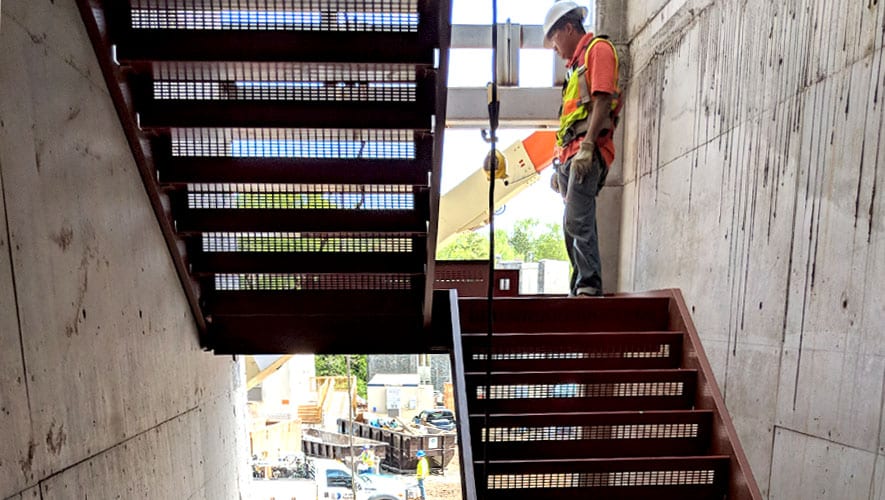
Custom metal stair fabrication provides architects and contractors with greater control over stair geometry, material selection, and integration with surrounding building systems. Standard stair assemblies are typically limited to fixed dimensions and predefined component configurations that may not align with the architectural intent of the project. Fabricated stair systems can accommodate curved layouts, offset landings, irregular elevations, and custom tread configurations that would be difficult to achieve using standard components. This flexibility allows project teams to maintain consistent design intent while meeting structural and code-related requirements, and avoiding time-consuming field fabrication and adjustments. Fabrication also supports coordination with adjacent wall systems, glazing assemblies, and structural framing conditions that vary between projects. As a result, the stair system can function as an integrated architectural feature rather than a standardized utility component.
Custom fabrication also allows tighter coordination between tread surfaces, railing finishes, and surrounding architectural materials. Fabricated stairpans can be designed to accommodate concrete fill, abrasive coatings, or specialty tread inserts depending on occupancy and usage conditions. Stair treads are often fabricated out of slip resistant materials, such as diamond plate (checker plate), or metal safety gratings, or bar grating. Handrail geometry can also be adjusted to satisfy both code compliance and project-specific design criteria. This level of control improves consistency throughout the stair assembly while reducing field modifications during installation.
Custom Fabrication vs. Off-the-Shelf Stair Components
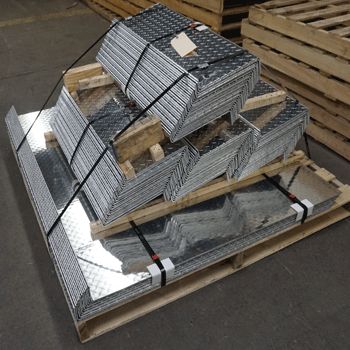
Off-the-shelf stair components are commonly selected for projects with standardized layouts and repetitive construction requirements because they reduce lead times and simplify procurement. Standardized components are typically manufactured in predefined sizes with limited finish and attachment options. While these systems may perform adequately in straightforward applications, they can create installation complications when project conditions vary from assumed dimensions. Contractors may need to modify framing, adjust connection points, or alter surrounding construction to accommodate the limitations of prefabricated stair assemblies. These field modifications can increase labor costs and introduce dimensional inconsistencies during installation. Standard systems may also limit architectural flexibility when projects require unique layouts or material combinations.
Custom fabrication requires additional detailing, engineering coordination, and manufacturing time compared to ordering stock components. However, fabricated systems allow project teams to address site-specific conditions directly during the design phase rather than resolving conflicts during installation. Fabricated stair systems can improve alignment accuracy, attachment consistency, and overall structural integration within the building. Material thicknesses, support spacing, and connection details can also be adjusted to satisfy specific load requirements or occupancy classifications. Although the initial fabrication process may involve higher upfront costs, the reduction in field modifications and installation conflicts can offset those expenses during construction. Fabricated systems also provide greater long-term durability when components are engineered specifically for the environmental and structural demands of the project.
Elevating Aesthetics and Functionality with Custom Fabrication
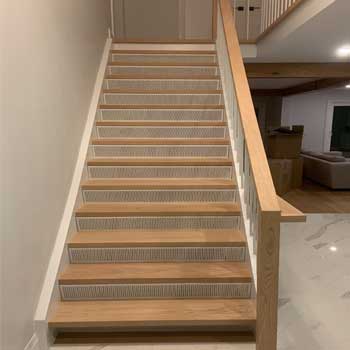
Custom fabrication allows stair systems to function as both structural assemblies and architectural design features within commercial and industrial spaces. Fabricated stairpans can incorporate custom tread profiles, exposed steel finishes, perforated metal surfaces, or integrated lighting provisions depending on project requirements. Handrails and guardrail systems can also be manufactured to align with the visual language of the surrounding structure. Projects involving open-concept commercial interiors, industrial office spaces, or mixed-use developments often require stair systems that contribute directly to the appearance of the finished environment. Fabricated metal components allow architects to maintain consistent detailing across the stair assembly while satisfying structural and code-related requirements. This level of integration is difficult to achieve using standard prefabricated stair packages.
Custom fabrication also improves stair system performance by allowing engineers to design components around actual loading conditions and structural constraints. Carrier angles, support frames, and landing assemblies can be reinforced where higher occupant loads or longer spans are expected. Fabricated stairpans can also be designed to accommodate heavier concrete fills or specialty tread systems without exceeding allowable deflection limits. Handrail and guardrail assemblies can incorporate reinforced mounting conditions to satisfy required load criteria under applicable building codes. Fabricators may also incorporate slip-resistant tread surfaces, drainage provisions, or corrosion-resistant materials depending on occupancy type and environmental exposure. These modifications improve both functionality and long-term service performance across a wide range of applications.
The Process of Custom Metal Stair Fabrication
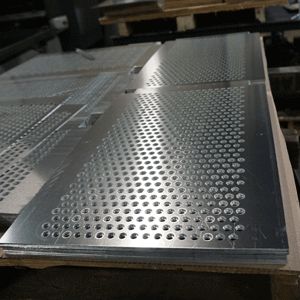
The custom fabrication process typically begins with a design consultation involving the architect, contractor, fabricator, and structural engineer. During this phase, project teams review stair geometry, occupancy requirements, attachment conditions, and finish expectations to establish fabrication parameters. Fabricators then produce detailed CAD drawings showing dimensions, connection details, weld locations, and assembly sequences. These drawings are reviewed and approved before material procurement and manufacturing begin. Accurate detailing during this stage reduces the likelihood of installation conflicts or dimensional discrepancies later in the project. Field verification may also be required before fabrication proceeds, particularly on renovation or retrofit projects where existing conditions vary from original plans.
After approval, fabrication moves into material processing, forming, welding, finishing, and quality inspection. CNC cutting equipment processes plate material according to approved shop drawings, while press brake forming, and welding operations (if needed) create pans and treads that are ready to be mounted to stair stringers. Fabricators inspect completed components for dimensional accuracy, weld quality, and finish consistency before shipment. In-Square products are of utmost importance to insure smooth, accurate installation, and to avoid the need for field adjustments. Depending on the project scope, assemblies may be partially pre-assembled to reduce field labor during installation. Installation crews then coordinate placement, anchorage, and alignment with the surrounding building structure. Throughout the process, communication between the fabricator, contractor, and design team remains necessary to maintain compliance with project specifications and installation requirements.
Real-World Examples of Custom Metal Stair Design
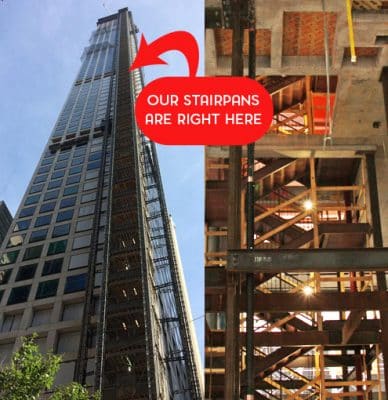
Our low-profile, Space Saving Stairpans were designed for and utilized in one of the tallest residential buildings in the world, right here in our state of New York. They allowed the A&E’s to fit more floors into the overall design of the building as well as save on the amount of concrete needed to fill the pans. More floors, meant more apartments and more income generating potential for the owners. Less concrete meant project savings for the contractors. Products that were shipped out In-Square meant faster, more accurate installation and a very successful partnership between all parties involved.
Custom metal stair fabrication is commonly used in commercial office buildings where architectural layouts require non-standard stair geometry and exposed structural finishes. Multi-level office spaces often incorporate feature staircases designed to connect open work areas while serving as a visible architectural element within the building. In these applications, fabricated stair systems may include exposed steel stringers, custom railings, perforated infill panels, and integrated landing assemblies tailored to the project layout. Standard stair components often cannot accommodate the dimensional variations or visual requirements associated with these projects. Fabricated systems allow designers to coordinate stair geometry directly with surrounding finishes, glazing systems, and structural framing conditions. This approach improves installation accuracy while preserving the architectural intent of the project.
Industrial facilities also frequently require fabricated stair systems due to equipment clearances, elevated work platforms, and specialized loading requirements. Manufacturing plants, processing facilities, and utility structures often include stairs positioned around machinery, piping systems, or restricted access areas where standard stair assemblies would not fit properly. Fabricated stairpans, landings, and guardrails can be adjusted to accommodate these site-specific conditions while maintaining required egress dimensions and load capacities. Exterior industrial stairs may also require galvanized finishes, bar grating treads, or reinforced support structures to address environmental exposure and heavy usage conditions. Retrofit projects present similar challenges because existing structural conditions rarely align perfectly with standard stair dimensions. Custom fabrication allows project teams to address these constraints directly during the design and detailing phase.
Why Choose Stair Components & Systems for Custom Metal Stair Fabrication?
Stair Components & Systems supplies fabricated stair components for commercial, industrial, and institutional construction projects requiring project-specific solutions. The company provides stairpans, treads, landing pans, carrier angles, railing systems, and related assemblies manufactured to project requirements and installation conditions. Fabrication capabilities support a wide range of material specifications, finish requirements, and stair configurations for both interior and exterior applications. Detailed shop drawings, coordinated fabrication processes, and dimensional quality control help maintain alignment between design intent and field installation. Project teams can work directly with experienced fabrication personnel during detailing, material selection, and production planning to address complex stair system requirements. This coordination helps reduce installation conflicts and supports more accurate project execution.
Stair Components & Systems also works closely with architects, contractors, and engineers throughout the fabrication and installation process. Collaboration during the design phase allows project teams to identify potential constructability concerns before manufacturing begins. Fabricated systems are produced according to approved drawings and project specifications to support code compliance and installation consistency. Our company’s experience with commercial and industrial stair systems allows us to support projects involving custom layouts, specialized loading requirements, and non-standard architectural conditions. Contractors and design professionals seeking fabricated stair solutions can work with Stair Components & Systems for project-specific support, detailing assistance, and coordinated manufacturing services.