

Open metal stair pans are common during commercial construction, but they create a problem while crews wait for permanent concrete or other tread fill to be installed. During this phase, workers may need to move between floors while stair pans remain unfinished. Uncovered pans do not provide the continuous walking surface required for temporary stairway use, and improvised inserts can introduce problems with fit, wear, and maintenance.
Temporary stair treads address this period between stair installation and permanent finishing. Purpose-built inserts provide a solid walking surface within the metal pan and can be removed when construction reaches the appropriate stage. For contractors, superintendents, and site safety managers, selecting the right temporary stair tread involves more than choosing a material. The insert must fit the stair pan, meet applicable temporary stairway requirements, withstand construction traffic, and support an installation sequence that coordinates with other trades.
What Are Temporary Stair Treads and How Are They Used?

Temporary stair treads are removable inserts installed in metal stair pans during construction, before the pans receive their permanent concrete or other specified fill. The inserts provide a solid surface for foot traffic while the permanent stair assembly remains unfinished. Depending on the stair design and product configuration, temporary treads may be manufactured from wood, plastic, or composite materials. The appropriate choice depends on the pan dimensions, installation requirements, expected construction traffic, and applicable project specifications.
On an active construction site, temporary treads allow workers to use designated stairways without stepping directly into open pans. Inserts are installed across the required tread area and maintained throughout the period when the stairway serves as an access route. OSHA requires temporary treads for pan stairs to extend across the full width and depth of the stair, with the material reaching at least the top edge of each pan. This makes fit and coverage important selection criteria, rather than optional product features.
Temporary treads also help protect the stair assembly during construction. Stair pans can be exposed to repeated foot traffic, tools, construction debris, and material handling before permanent finishing begins. A properly fitted insert provides a replaceable surface during this period. Removable designs can also support phased construction because crews can take out the inserts when the stair system is ready for concrete placement or another finishing operation, following the stair manufacturer’s installation sequence.
Are Temporary Stair Treads Mandatory on Construction Sites?

Under OSHA’s construction stairway standard, 29 CFR 1926.1052(b), foot traffic is generally prohibited on pan stairs where treads or landings will be filled later unless they are temporarily fitted with wood or other solid material meeting the standard’s coverage requirements. The temporary material must reach at least the top edge of each pan, and temporary treads must cover the full width and depth of the stair. Temporary treads must also be replaced when wear reduces them below the top edge of the pan. These requirements apply outside the period when the stairway itself is under construction.
The standard does not require contractors to purchase a particular branded tread or use one specific manufactured product. It establishes requirements for the temporary walking surface. Purpose-built inserts can provide a practical way to meet those requirements when their material, dimensions, installation, and condition are appropriate for the stair system. A product should not be described as OSHA-compliant solely because it is marketed as a temporary stair tread. The contractor must verify that the installed configuration satisfies the applicable requirements.
Project requirements may also include state-plan OSHA rules, building requirements, contract specifications, or site-specific safety procedures. General contractors and site safety managers should confirm which requirements apply before opening an unfinished stairway to foot traffic.
What OSHA Says About Stairway Surfaces During Construction

OSHA 29 CFR 1926.1052 distinguishes between pan stairs awaiting fill and skeleton metal stairs awaiting permanent treads or landings. For pan stairs, the standard requires temporary wood or other solid material extending at least to the top edge of each pan. For skeleton metal stairs, it requires secured temporary treads and landings long enough to cover the entire tread or landing area. The standard also states that temporary-service treads must be made of wood or other solid material and installed across the full width and depth of the stair.
These requirements provide a practical checklist when evaluating a temporary tread. Confirm that the insert covers the required area, reaches the specified height, remains in place during use, and is replaced when wear makes it insufficient. The site safety officer should review the actual product and installation rather than relying on a general statement that the product meets OSHA requirements. OSHA also makes clear that it does not certify or endorse specific temporary stair tread products. Its requirements apply to the installed system and conditions of use.
What Is the Alternative to Using Wood Inserts for Temporary Stair Pans?
Wood planks have traditionally served as temporary inserts because lumber is readily available and can be cut at the jobsite. However, field-cut wood introduces variability in dimensions, fit, and surface condition. Planks can split, warp, or deteriorate under repeated use, and moisture or accumulated jobsite contaminants can affect traction. A plank that fits one pan may also require additional cutting or replacement when crews encounter a different pan width or depth.
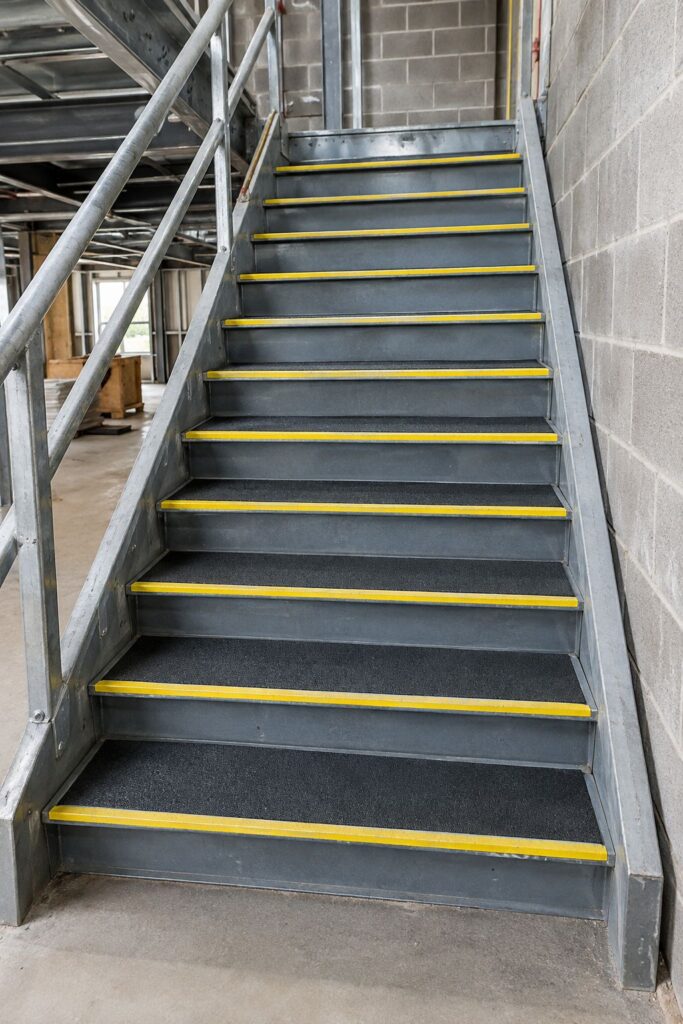
Purpose-built temporary stair treads offer an alternative to cutting individual pieces of lumber. Manufactured inserts can be produced to suit specified pan dimensions, reducing the need for field fabrication. Depending on the product design, they may also be easier to handle, remove, clean, and reinstall as construction progresses. These features can be useful on multistory projects where crews must install temporary surfaces across many flights of stairs and maintain them throughout several phases of work.
Plastic and composite inserts may offer advantages over wood when moisture resistance, repeated handling, and reuse are priorities. Their actual performance depends on the material formulation, tread design, dimensions, and construction conditions. Contractors should confirm that the selected insert qualifies as solid material under the applicable requirements and covers the full width and depth of the stair. They should also verify the manufacturer’s installation and inspection instructions before using the product on an active construction site.
A purpose-built insert does not eliminate the need for inspection. Inserts can still become damaged, contaminated, displaced, or worn during construction. The advantage lies in using a product designed for the intended stair-pan application, with dimensions and handling characteristics that can be checked before installation.
Key Benefits of Temporary Stair Treads on Construction Sites
Temporary stair treads provide a defined walking surface during the construction period and help contractors manage the transition from steel stair installation to permanent finishing. Their value depends on the tread’s fit, material, condition, and compatibility with the stair system. Three considerations are particularly relevant to site superintendents and safety managers: walking-surface condition, protection of permanent stair components, and reuse across multiple construction phases.
Slip Resistance During High-Traffic Construction Phases
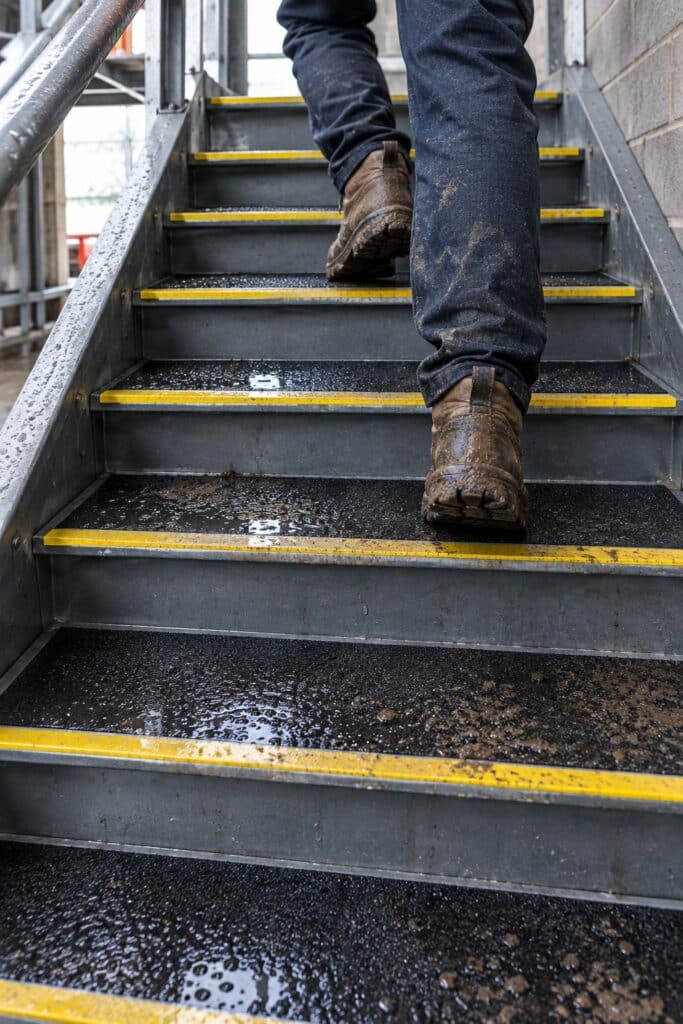
Construction stairways can be exposed to water, mud, dust, concrete residue, and other materials that affect footing. A tread’s surface design and its condition under actual jobsite conditions influence how well it performs. Contractors should select products with documented surface characteristics appropriate to the intended use and follow the manufacturer’s cleaning and inspection recommendations.
OSHA 29 CFR 1926.1052(a)(7) requires slippery conditions on stairways to be eliminated before the stairways are used to reach other levels. Temporary tread inserts should therefore be inspected for contamination, surface wear, damage, and secure seating. No tread material should be assumed to remain slip-resistant under every condition. Regular inspection and housekeeping remain necessary even when a purpose-built insert is installed.
Protection for Permanent Stair Components
Open metal stair pans can sustain damage before permanent fill and finishing work is complete. Construction traffic, dropped tools, and material handling can dent exposed surfaces or damage areas that will later receive concrete or another specified finish. A removable insert provides a surface that can absorb some of this routine contact and can be replaced separately from the stair assembly.
The degree of protection depends on the tread’s design and how it fits within the pan. Inserts should not interfere with the stair components or create new trip points. Before permanent finishing begins, the framing contractor or responsible trade should inspect the pans for damage, remove debris, and confirm that the assembly is ready for the next stage. Temporary treads can reduce direct exposure during construction, but they do not replace the need to inspect the underlying metal stair system.
Reusability Across Multiple Floors and Projects
On multistory projects, temporary stair treads may need to be installed, inspected, removed, and reinstalled as work progresses. Reusable products can reduce the number of replacement inserts required compared with wood planks that split, warp, or no longer fit securely. Their suitability for reuse depends on the material, condition, and manufacturer’s instructions.
A planned reuse process should include inspection before each installation, cleaning when necessary, and removal from service when an insert is damaged or no longer fits correctly. Contractors should also establish a method for tracking inserts as crews move between floors. The potential cost advantage comes from repeated use and reduced field cutting or replacement, not from an assumption that every insert will last indefinitely.
How to Select the Right Temporary Tread for Your Project
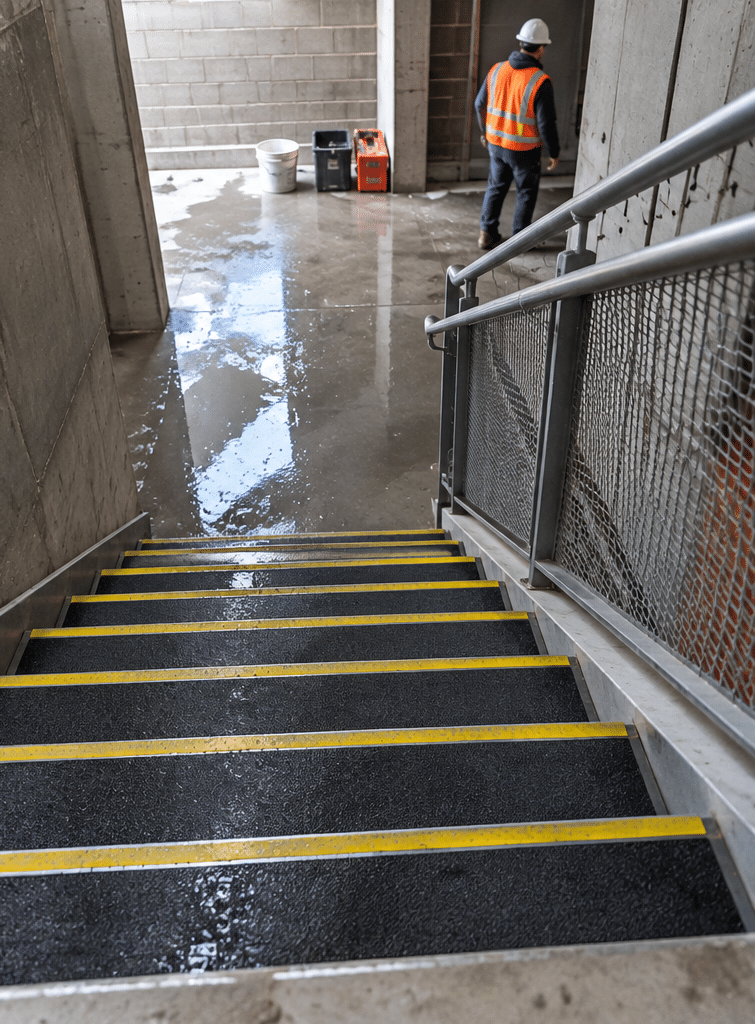
Selection begins with the stair pan dimensions. The insert must cover the full width and depth required by OSHA 29 CFR 1926.1052(b), and its height must reach at least the top edge of the pan where that provision applies. Contractors should measure the actual pan or consult the stair manufacturer’s drawings rather than assuming that all metal stair pans share the same dimensions. Variations in width, depth, pan shape, or construction can affect whether an insert seats properly.
Material selection is the next consideration. Wood remains an option under the OSHA standard, while other solid materials may be appropriate depending on the product’s design and intended use. Plastic and composite products can offer advantages in moisture resistance and repeated handling, but contractors should verify the specific product’s suitability for construction traffic and the required installation. Weight also matters when crews need to carry inserts up multiple flights or reposition them as work progresses. The best choice balances fit, handling, durability, and the maintenance required throughout the project.
Before ordering, consult the manufacturer’s sizing information and confirm compatibility with the specified stair-pan profile. Where a project includes multiple stair configurations, prepare a schedule listing pan dimensions and required insert quantities. This reduces the likelihood of receiving inserts that require unplanned field modification or fail to cover the intended walking surface.
| Criteria | Wood Inserts | Purpose-Built Temporary Treads |
|---|---|---|
| Fit to pan | Often cut and fitted at the jobsite | Available in specified sizes for compatible pan dimensions |
| Surface condition | Can change with wear and moisture | Depends on product material, surface design, and condition |
| Durability | Can split, warp, or deteriorate | Depends on material and intended reuse |
| Installation | May require measuring and cutting | May reduce field fitting when correctly sized |
| Protection of pan | Covers the surface where fitted | Designed to cover the pan when correctly sized and installed |
| Reuse | Depends on condition and fit | Some products are designed for repeated removal and installation |
| Project cost | Includes cutting, fitting, and replacement labor | Depends on initial cost, reuse, maintenance, and replacement needs |
No material is automatically the best choice for every job. A correctly sized wood insert can satisfy the applicable requirements, while a manufactured product can offer handling and reuse advantages when its design is suited to the pan. Contractors should compare the total work involved in sizing, installing, inspecting, maintaining, and replacing the inserts throughout the construction phase.
When to Install and Remove Temporary Stair Treads
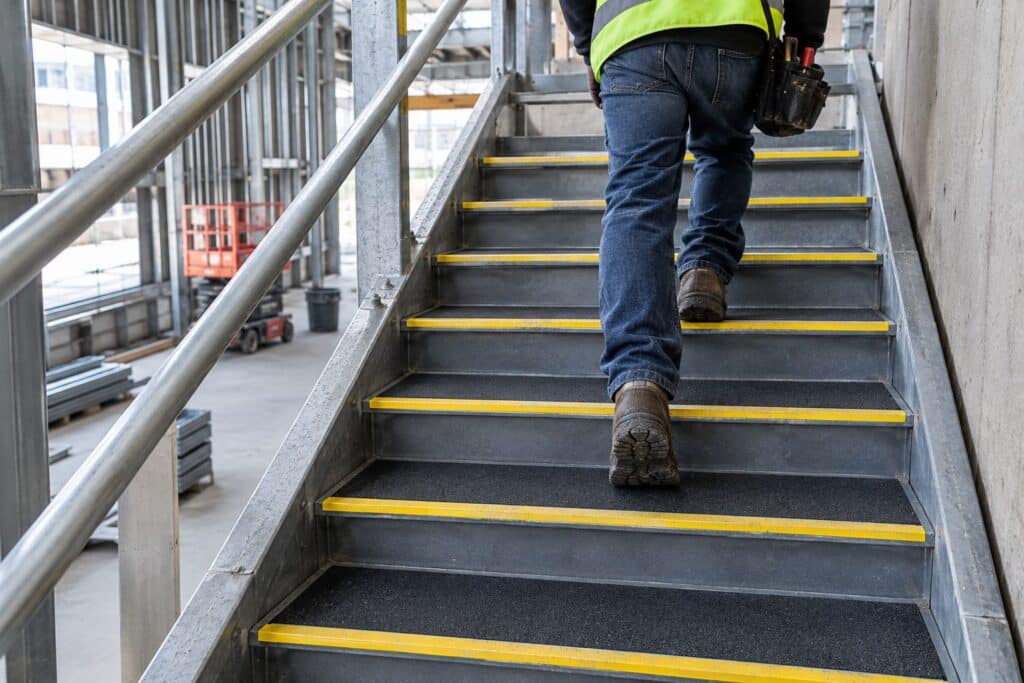
Temporary treads should be installed before workers use pan stairs as a route between levels, except during stairway construction as addressed by the OSHA standard. Before opening the stairway to foot traffic, the responsible contractor should verify that each insert covers the required area, reaches the top edge of the pan where required, and remains securely seated. The stairway should also be checked for debris, slippery conditions, and other hazards that could affect use.
Removal timing depends on the stair system and the construction sequence. Inserts are commonly removed before concrete fill is placed or before permanent tread finishing begins, but the responsible trade should follow the stair manufacturer’s requirements and coordinate with the concrete and finishing contractors. Removing the inserts too early can leave the stairway unsuitable for foot traffic, while leaving them in place during an incompatible finishing operation can delay the work or interfere with the completed assembly.
Inspect temporary treads throughout the period of use. Replace inserts that are worn below the top edge of the pan, damaged, unstable, or otherwise unsuitable. Inspection frequency should reflect traffic levels, environmental conditions, and the site’s safety procedures. A high-traffic stairway may require more frequent checks than one used occasionally by a small crew.
Coordinating Tread Installation with Other Trades
The general contractor should coordinate temporary tread installation with the steel stair installer and the site safety team. This coordination establishes who is responsible for measuring pans, obtaining inserts, installing them, inspecting their condition, and removing them before permanent finishing. Responsibilities should be clear before the stairway becomes a routine access route.
Coordination with concrete and finishing trades is also necessary. Those teams should know when temporary inserts will be removed and when the stairway can be taken out of service for the next construction phase. A simple schedule identifying stair flights, installation dates, inspection responsibilities, and planned removal can help prevent unfinished pans from being exposed to foot traffic during transitions between trades.
Temporary Stair Tread Solutions from Stair Components & Systems
Stair Components & Systems offers TREADX Temporary Stair Tread Inserts, a removable stair-pan tread designed for construction sites where metal stair pans require a temporary walking surface before permanent fill is installed. TREADX features a permanent non-skid surface and an OSHA safety stripe to provide a clearly defined walking area during construction. Its design accommodates 1.5-inch and 2-inch fill stair pans, making it suitable for a range of common metal stair configurations.
TREADX inserts are available in standard lengths from 36 to 72 inches, with three standard width options and custom widths available up to 16 feet. The inserts are impervious to weather and water, making them suitable for exposure to outdoor construction conditions. They also feature a strong, rigid construction intended for repeated use throughout construction projects. Optional Class B fire rating configurations are available for projects with additional fire performance requirements.
Installation and removal require no tools, allowing crews to position or remove the inserts without field cutting or permanent fastening. Once removed, TREADX inserts can be stacked for storage and reused on other compatible stair installations. The product is also 100% recyclable and manufactured in the United States. These features make TREADX an alternative to field-cut wood inserts, particularly on projects with multiple stair flights or repeated construction phases.
For contractors and construction managers looking for temporary stair-pan protection, TREADX combines a permanent non-skid surface, safety stripe, tool-free installation, and reusable construction in one product. Explore TREADX Temporary Stair Tread Inserts from Stair Components & Systems or contact our team for product sizing, custom width availability, and project-specific assistance.
Working on planning your next project?
Let our experts help you make informed, confident decisions!
