Project Overview: Custom Stair Pans for a Connecticut School Build
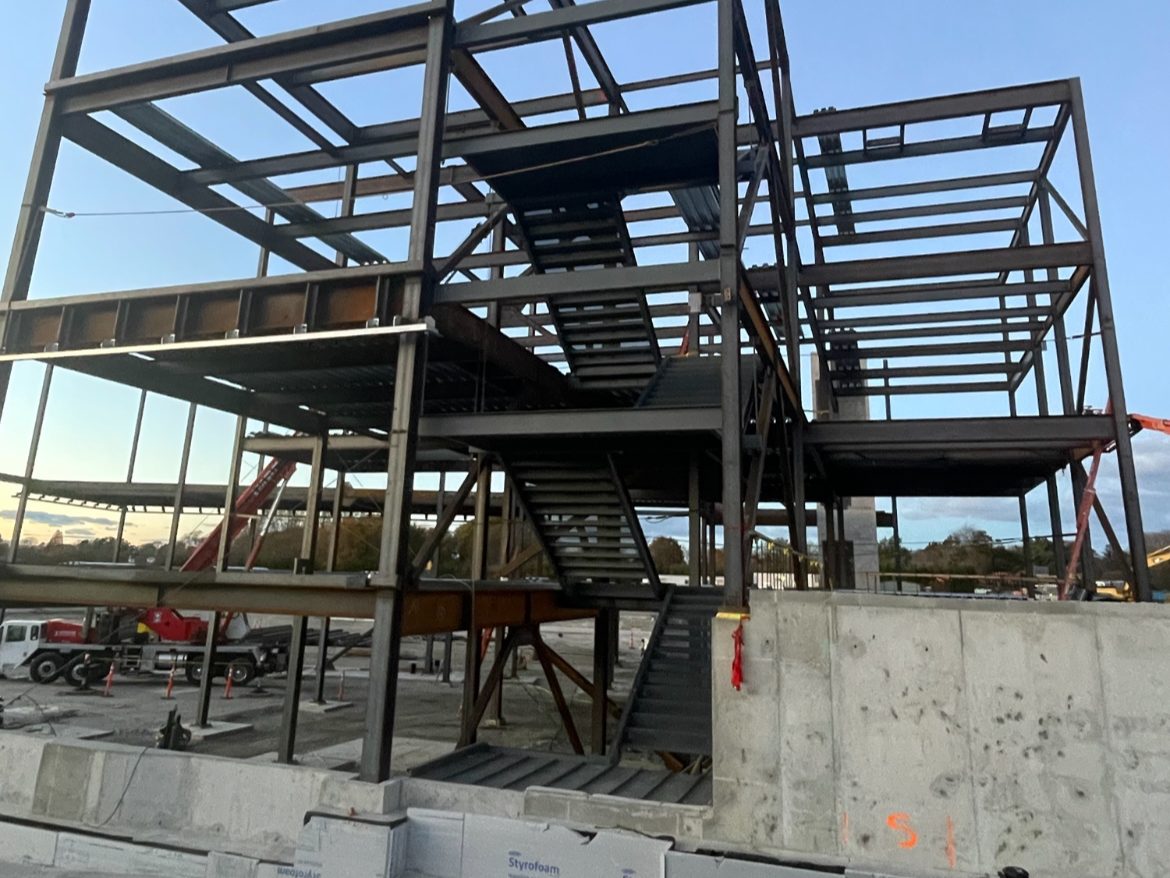
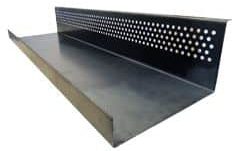
School construction projects operate under rigid timelines driven by funding cycles, occupancy targets, and coordination between multiple trades working within a confined structure. On a new school build in Middletown, Connecticut, the stair system represented a critical path component that had to align precisely with structural steel erection, floor deck placement, and interior sequencing. The project called for our Type 3A stair pans, customized to include decorative perforated metal stair risers, intended to remain visible, as part of the finished architectural design.
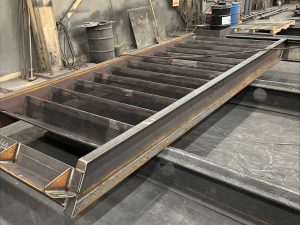
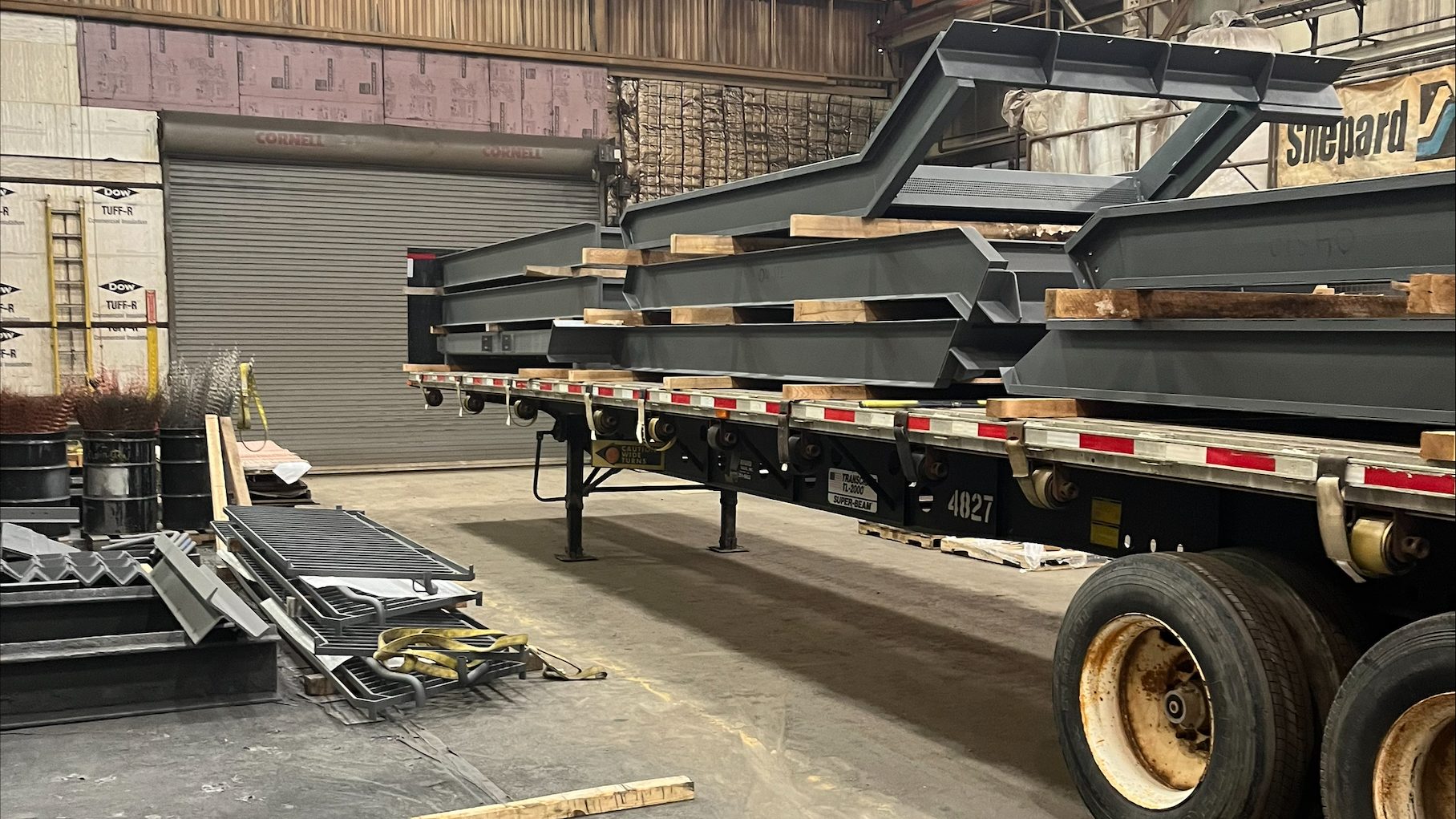
These stair pans were fabricated to match project-specific dimensions and connection details. Each pan needed to fit precisely between stringers without field modification, allowing the contractor to proceed directly to welding them onto stringers, loading them onto a truck and transporting them to the jobsite for installation. Because the stairs would later receive concrete fill, dimensional accuracy was critical for ensuring consistent riser heights and level treads across multiple flights.
Why Steel Pan Stairs Are Common in Institutional Construction
Steel pan stairs are widely used in schools, hospitals, parking garages, and other institutional buildings because they combine structural reliability with long-term durability. The system consists of concrete stair forms fabricated from sheered and formed steel sheets, welded to stringers and subsequently filled with concrete, creating a solid walking surface capable of handling high foot traffic over decades of use. Once filled, the assembly provides mass that reduces vibration and produces a safe, stable walking surface underfoot.
Institutional environments also demand materials that tolerate heavy use, maintenance equipment, and potential impacts. Concrete-filled steel pans resist wear better than many alternative systems and can support the inclusion of abrasive nosings and other anti-slip measures. From a construction standpoint, steel pan stairs can be installed early in the project, enabling vertical circulation before finishes are complete and supporting safe movement of crews between floors.
The Scheduling Challenge Behind This Concrete Pan Stair System
The primary challenge on this project was not design complexity but timing. The contractor needed the concrete pan stairs delivered within a very tight timeline. They needed enough time to weld the pans into their stair stringers, before transporting them to the jobsite during a very specific time window that coordinated with the project’s strict design phase schedule. There was no space to store the stair assemblies on site. Delivering too early would create congestion and risk damage, while delivering too late would halt progress on upper-level work, costing the project money.
Because stair cores often serve as access routes for other trades, delays would ripple through electrical, mechanical, and interior work. Maintaining schedule continuity required both rapid fabrication and disciplined logistics planning.
Fast-Track Fabrication of a Metal Pan Stair Assembly
To meet the compressed timeline, the fabrication process focused on speed without sacrificing dimensional precision. Maintaining good relationships with steel suppliers allowed us to procure needed materials within a day of receiving the order. Investments in state of the art CNC machinery and a highly skilled labor force allowed use to shear the steel sheets quickly, run them through our turret punch to apply the aesthetic perforations in the the riser portion, then form them into pans in rapid succession. Everything we needed to perform the job was already in house.
Rapid turnaround was possible because our stair system fabrication techniques have been honed over decades of specialty work in the stair industry. By delivering components that were ready for immediate attachment, the fabrication team enabled the contractor to move from receipt to installation with minimal staging. The contractor reported that the components remained in their facility for less than one week, while being fitted to stringers, before being shipped to the jobsite.
Perforated Metal Stair Risers for Architectural Requirements
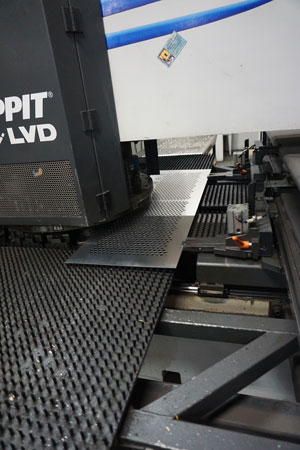
In addition to meeting structural and scheduling demands, the project included a visual component. The stair risers featured a specialty perforation pattern intended for architectural display rather than concealment behind finishes. This requirement introduced additional fabrication steps, as the perforations needed to be consistent across all flights while maintaining structural integrity.
Perforated risers can serve multiple purposes in public buildings. They allow light to pass through the stair assembly, reduce the visual mass of enclosed stair towers, and create a distinctive appearance that aligns with contemporary design trends in educational facilities. Producing these elements without extending fabrication time required careful planning to integrate the perforation process into the overall production workflow.
Phased Delivery That Kept Stair Installation Moving
Shipping was organized to match the contractor’s installation sequence, ensuring that jobsite crews received only the components they could immediately install. This phased approach reduced the need for on-site storage and minimized the risk of misplaced or damaged parts. It also allowed the contractor to maintain a steady workflow rather than alternating between periods of inactivity and overcrowded staging areas.
By coordinating delivery timing with erection progress, the project team avoided disruptions that commonly occur when materials arrive either too early or too late. Each shipment supported a specific portion of the stair installation, enabling crews to complete one area before moving to the next. This level of coordination proved essential to maintaining momentum on a schedule-driven build.
Lessons for Contractors Managing Time-Sensitive Steel Pan Stair Projects
This project demonstrates that the success of a steel pan stair installation often depends as much on logistics as on fabrication quality. Rapid production alone does not guarantee schedule compliance if components arrive out of sequence or require significant field adjustment. Contractors benefit most from suppliers who understand how stair systems interact with structural steel erection, access requirements, and overall project phasing.
Early coordination, clear communication of sequencing needs, and the ability to deliver installation-ready components can prevent delays that affect multiple trades. For institutional projects where opening dates are fixed, these factors become critical to keeping construction on track. A fabrication partner capable of combining speed with organized delivery can help ensure that stair assemblies support progress rather than becoming a bottleneck.
Common stair system questions answered
A steel pan stair system consists of metal tread pans welded to structural stringers and later filled with concrete to create a durable, solid walking surface.
Schools require stair systems that can withstand heavy daily traffic, resist wear, and provide long service life. Concrete-filled steel pan stairs meet these requirements while allowing early installation during construction.
Yes. Stair pans can be fabricated to project-specific dimensions and may include features such as perforated risers, specialty nosings, or finish-ready surfaces.
Get Started with Stair Components & Systems Now
If your project requires custom steel pan stairs on a tight schedule, working with a fabricator experienced in rapid production and coordinated delivery can prevent costly delays. Early engagement allows stair components to be planned alongside structural steel, ensuring installation proceeds without interruption.